Tuesday, February 28, 2017

February 1917


In February 1917 the World War comes to the doorstep of the United States.  Following Germany’s resumption of unrestricted submarine warfare, President Wilson severs diplomatic relations with Germany but stops short of declaring war.  Announcing the diplomatic break to a joint session of Congress, he adheres to a policy of “armed neutrality” and declares that the United States will not go to war in the absence of an “overt act.”  As the submarine threat causes American shipping to grind to a halt, President Wilson proposes legislation authorizing the arming of merchant ships.  The month ends with another major step toward American belligerency as Great Britain, which has intercepted and decoded the Zimmermann Telegram, delivers it to the American Government and President Wilson releases it to the press.  German submarines torpedo and sink two British ocean liners, taking the lives of two Americans.  In Mesopotamia, the British Army drives the Turks out of Kut-Al-Amara.  German forces in France begin a withdrawal to the Hindenburg Line.  Mata Hari is arrested in Paris.

*****


February 3: President Wilson Addressing Congress

Germany's announcement on the last day of January that it was resuming unrestricted submarine warfare has dominated the American political scene this month.   Only last month President Wilson in an address to the Senate advocated "peace without victory."  The German announcement less than two weeks later forced a reversal of American policy.  On February 3, the President told a joint session of Congress that diplomatic relations with Germany had been severed.  He reminded the Congress that after the attack on the British channel steamer Sussex last year the United States had threatened to break diplomatic relations unless Germany abandoned "its present methods of submarine warfare against passenger and freight carrying vessels," and that Germany in response had pledged that "in accordance with the general principles of visit and search and destruction of merchant vessels recognized by international law, such vessels, both within and without the area declared a naval war zone, shall not be sunk without warning and without saving human lives, unless these ships attempt to escape or offer resistance."  Germany added that "neutrals cannot expect that Germany [will] restrict the use of an effective weapon if her enemy is permitted to continue to apply at will methods of warfare violating the rules of international law."  The United States in its reply welcomed the German pledge but said it assumed Germany did not intend to imply that its pledge was "in any way contingent upon the course or result of diplomatic negotiations between the United States and any other belligerent government," and that the United States "cannot for a moment entertain, much less discuss," such a suggestion.  "Responsibility in such matters," it said, "is single, not joint, absolute, not relative."  The German government made no further reply prior to its January 31 note withdrawing its pledge altogether.

President Wilson told Congress that the January 31 note, which "suddenly and without prior intimation of any kind deliberately withdraws the solemn assurance [of the Sussex pledge]," leaves "no alternative consistent with the dignity and honor of the United States" but for it to do what it said it would do last year if Germany failed to abandon "the methods of submarine warfare which it was then employing and to which it now purposes again to resort."  He said the Secretary of State had been instructed to withdraw the American Ambassador in Berlin and to hand the German ambassador his passports.  The President added, however, that despite this "sudden and deplorable renunciation of its assurances, ... I refuse to believe that it is the intention of the German Government to do in fact what they have warned us they will feel at liberty to do," adding that "only actual overt acts on their part can make me believe it even now."  If that confidence proves unfounded, the President said he would "take the liberty of coming again before the Congress to ask that authority be given to me to use any means that may be necessary for the protection of our seamen and our people in the prosecution of their peaceful and legitimate errands on the high seas."


Count Tarnowsky von Tarnow

In a remarkable example of poor timing, the new Ambassador sent by Austria-Hungary to replace the expelled Ambassador Konstantin Dumba arrived in the United States on February 1 and learned of the German note only when he arrived.  The new Ambassador-designate, Count Tarnowsky von Tarnow, appeared at the State Department to present his ambassadorial credentials the day after President Wilson's address to Congress, and was told that the Secretary was unable to receive him.  Shortly thereafter a note from Austria-Hungary arrived at the State Department announcing that, as an ally of Germany, it would adhere to the new German submarine policy.  At month's end diplomatic relations between the United States and Austria-Hungary remain unbroken and Count Tarnow remains in the United States, but he has not been officially received as his country's Ambassador.  In Vienna, Joseph C. Grew continues in his post as American Ambassador to Austria-Hungary.


Philip Franklin

Unwilling to be on the receiving end of an "overt act," American shipowners have cancelled all sailings, bringing American overseas commerce to a virtual halt.  On February 7, Secretary of State Lansing advised shipowners that while the government "cannot give advice to private persons as to whether their merchant vessels should sail on a voyage to European ports by which they would be compelled to pass through the [war zone], [it] asserts that the rights of American vessels to traverse all parts of the high seas are the same now as they were prior to the issuance of the German declaration, and that a neutral merchant vessel may, if its owners believe that it is liable to be unlawfully attacked, take any measures to prevent or resist such attacks."  Permission for merchant ships to arm themselves, however, is small comfort.  The Navy has declined to provide arms to civilian ships on the ground that to do so would be inconsistent with American neutrality, and Mr. Philip A. S. Franklin, president of the International Mercantile Marine Company, spoke for many shipowners when he said that he knows of no store in New York where 6-inch guns are on sale.


RMS Laconia Departing New York


A few days after President Wilson's address to Congress, a German submarine torpedoed and sank a British liner, SS Californian, in the Western Approaches en route to Glasgow.  One American was on board, but was not among the forty-one passengers and crew who died.  Another attack on a passenger liner took place on February 25 off the coast of Ireland when a German submarine attacked and sank the Cunard liner RMS Laconia.  Most of the Laconia's passengers were able to get into lifeboats, where they were picked up by a passing steamer and taken to Queenstown.  Four Americans died, however, including Mrs. Mary Hoy and her daughter Elizabeth, friends of Mrs. Wilson.  The next day the president was back in Congress asking for the passage of legislation authorizing the arming of American merchant and passenger ships.  News of the Laconia's sinking arrived in the House chamber just as the president arrived.  He did not mention the Laconia in his address, but told Congress that no "overt act" of the kind he had referred to on February 3 had occurred.


 Chairman Flood

Immediately after the president's address, Chairman Henry D. Flood of the House Armed Services Committee introduced a bill in the House of Representatives granting the president the requested authority to arm civilian ships.  Following a conference the next day between the President and Secretary Lansing, the White House let it be known that the president now regards the attack on the Laconia as a "clear-cut" case of violation of international law and an "overt act" of the kind he had warned against.  Rather than go back to Congress immediately, however, he has decided to await Congress's action on the Armed Ships Bill.  There is no doubt of the bill's passage in the House, but the Senate is another matter.  The bill has broad bipartisan support, but the Sixty-fourth Congress will expire on March 4, and the Senate has no rules for limiting debate.  It is possible and quite likely, therefore, that a few opponents of the bill will force the debate to continue until the Congress expires, requiring the president to call a special session of the new Congress to consider the bill.


 The Zimmermann Telegram

Another startling development coincided with the debate on the Armed Ships Bill when the American government learned of the Zimmermann Telegram.  German Foreign Minister Zimmermann had sent the telegram to the German Ambassador in Mexico City by way of Ambassador von Bernstorff in Washington, taking advantage of an agreement by the State Department to allow the German Embassy to transmit encoded messages, supposedly in the pursuit of a peaceful settlement.  Far from pursuing peace, the Zimmermann Telegram proposed that, in the event of war between the United States and Germany, Mexico join an alliance with Germany in which Mexico would make war against the United States.  Zimmermann offered generous financial assistance and an "understanding on [Germany's] part that Mexico is to reconquer the lost territory in Texas, New Mexico and Arizona."  He also sought to take advantage of long-strained Japanese-American relations by suggesting that Mexico act as mediator to make peace between Germany and Japan and persuade Japan to join the war against the United States.

British Naval Intelligence had intercepted and decoded the Zimmermann Telegram and delivered it on February 23 to American Ambassador Walter Hines Page in London.  Page forwarded it to the State Department, which in order to conceal the British Government's role waited to disclose it until it obtained a copy of the encoded telegram from Western Union.  On February 28 President Wilson, who was shocked by Zimmermann's audacious proposal and personally offended by the German Embassy's abuse of the privilege of transmitting encoded messages, released the telegram and its decoded content to the press.

As February draws to a close, Germany's resumption of unrestricted submarine warfare is disrupting international merchant and passenger traffic, the Armed Ships Bill is being debated in Congress, and both the Sixty-fourth Congress and President Wilson's first term are about to expire.  The sudden disclosure of the Zimmermann Telegram seems certain to take the escalating tension and turmoil in American politics to a new level.


President Roosevelt and His Sons in 1907

Since at least as long ago as the sinking of the Lusitania in May 1915, former President Roosevelt has been heaping scorn on President Wilson for his failure to take sides in the World War.  This month, to no one's surprise, he enthusiastically endorsed President Wilson's decision to break off diplomatic relations with Germany.  The Colonel has long anticipated the day when America would enter the war, and he hopes to lead troops into combat as he did in the Spanish-American War.  On the day President Wilson addressed Congress, Roosevelt issued a statement that he would "in every way support the president in all that he does to uphold the honor of the United States and to safeguard the lives of American citizens."  He added that he had written to the War Department "asking permission to raise a division if war is declared and there is a call for volunteers.  In such an event I and my four sons will go."


Operation Alberich (The Hindenburg Line is the Broken Line to the Right)

On the Western Front this month, the German Army began Operation Alberich, a withdrawal from much of the Somme battlefield that was the scene of bitter struggle for most of last year.  The Germans will occupy positions along the newly constructed and strongly fortified "Hindenburg Line."  In addition to strengthening the German defenses, this will straighten the German front, shortening its length by several miles and enabling the German Army to release as many as thirteen divisions for redeployment.  As they withdraw, the Germans are carrying out a "scorched earth" policy, razing villages, destroying railroads and bridges, poisoning wells, and planting mines and booby traps.  They are removing over 100,000 French civilians from the area and transporting them to other areas of occupied France for forced labor.  Elderly Frenchmen, women and children are being left behind with subsistence rations.
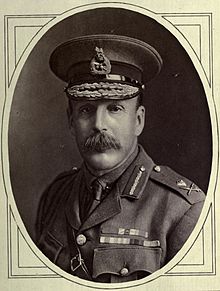


General Maude

Kut Al Amara, situated on a bend of the Tigris River south of Baghdad, was the scene of a humiliating defeat for the British Army last year, as an Anglo-Indian force surrendered to the Turks after a siege of over four months and were force-marched to captivity in Anatolia.  Thousands died along the way or in the prisons to which they were taken.  On February 24 another Anglo-Indian force, this one commanded by General Frederick Stanley Maude, recaptured Kut.  Over a thousand Turkish prisoners were taken but most of the Turkish garrison escaped and withdrew upriver.


Mata Hari

Margaretha Geertruida Zelle, a citizen of the neutral Netherlands, is a well-known exotic dancer and courtesan who goes by the name Mata Hari, a name she assumed while living in the Dutch East Indies.  She was arrested in Paris on February 13, accused of spying for Germany.


February 1917 – Selected Sources and Recommended Reading

Contemporary Periodicals:
American Review of Reviews, March and April 1917
New York Times, February and March 1917

Books and Articles:
A. Scott Berg, Wilson
Britain at War Magazine, The Fourth Year of the Great War: 1917
Winston S. Churchill, The World Crisis 1911-1918
John Milton Cooper, Jr., Woodrow Wilson: A Biography
John Milton Cooper, Jr., The Warrior and the Priest: Woodrow Wilson and Theodore Roosevelt
Patrick Devlin, Too Proud to Fight: Woodrow Wilson's Neutrality
John Dos Passos, Mr. Wilson's War
David Fromkin, A Peace to End All Peace: Creating the Modern Middle East, 1914-1922
Martin Gilbert, Churchill: A Life
Martin Gilbert, The First World War: A Complete History
Martin Gilbert, A History of the Twentieth Century, Volume One: 1900-1933
Martin Gilbert, Winston S. Churchill Volume III: The Challenge of War, 1914-1916
Richard F. Hamilton and Holger H. Herwig, Decisions for War, 1914-1917
August Heckscher, Woodrow Wilson: A Biography
Godfrey Hodgson, Woodrow Wilson's Right Hand: The Life of Colonel Edward M. House
Paul Jankowski, Verdun: The Longest Battle of the Great War
Keith Jeffery, 1916: A Global History
Roy Jenkins, Churchill: A Biography
John Keegan, The First World War
David M. Kennedy, Over Here: The First World War and American Society
Ian Kershaw, To Hell and Back: Europe 1914-1949
Nicholas A. Lambert, Planning Armageddon: British Economic Warfare and the First World War
Arthur S. Link, Wilson: Confusions and Crises, 1915-1916 
Arthur S. Link, Woodrow Wilson and the Progressive Era, 1910-1917
G.J. Meyer, A World Undone: The Story of the Great War, 1914 to 1918
Michael S. Neiberg, The Path to War: How the First World War Created Modern America
Robin Prior and Trevor Wilson, The Somme
Jonathan Schneer, The Balfour Declaration: The Origins of the Arab-Israeli Conflict 
J. Lee Thompson, Never Call Retreat: Theodore Roosevelt and the Great War
Adam Tooze, The Deluge: The Great War, America and the Remaking of the Global Order, 1916-1931
Barbara W. Tuchman, The Zimmermann Telegram   
Geoffrey C. Ward and Ken Burns, The Roosevelts: An Intimate History
The West Point Atlas of War: World War I

Tuesday, January 31, 2017

January 1917


It's January 1917.  As a New Year dawns, a global war of unprecedented scope and destruction is at the top of the political agenda in every major country, belligerent or neutral.  Great Britain, ruler of a world-wide empire, has a new Prime Minister.  Russia, a major Entente power, is in political turmoil following the murder of Grigori Rasputin, a confidant of the royal family, by monarchists who feared his influence.  Russia’s offensive against Austria-Hungary has ended in stalemate, as have the German siege of Verdun and the Anglo-French attack on the Somme.  Emperor Franz Joseph of Austria-Hungary, whose nephew's murder two and a half years ago led to the outbreak of the war, has died; the new emperor is his grand-nephew Charles.  The United States, the largest and most important of the neutral nations, has just elected Woodrow Wilson to a second term under the slogan “He kept us out of war.”  One of his first acts after the election was to asked the warring powers to state their war aims, asserting that the two sides' stated objectives "are virtually the same."  Germany has proposed a peace conference to be held in a neutral country, but has declined to state its position in advance, leading the Entente nations to denounce its proposal as a “sham.”  German military leaders, increasingly in the ascendant, are pressing for a resumption of unrestricted submarine warfare.

The first month of the New Year marks a decisive turning point in the war, as Germany makes the critical decision to resume unrestricted submarine warfare. Recognizing that this might draw the United States into the war, German Foreign Minister Arthur Zimmermann sends a secret telegram to Mexico proposing that it join the war on Germany's side.  Unaware of either Germany's decision or Zimmermann's telegram, President Wilson makes a speech to the Senate advocating "peace without victory" and orders the withdrawal of American troops from Mexico.  When the new German policy is announced at the end of the month, the whole world, and America in particular, holds its breath.

*****


 Count Czernin

Last month Germany responded to President Wilson's request for a statement of "terms on which the war might be concluded" by repeating its proposal for a peace conference without preconditions.  The Entente nations responded to the president's request on January 10.  A joint note delivered to the American ambassador in Paris states that the Allies seek restoration of invaded territories with indemnities, restoration of territories taken by force in the past, liberation of ethnic groups in Austria-Hungary, expulsion of Turkey from Europe, and Polish independence.  The threat to the unity of Austria-Hungary, made explicit by the Allies' response, has motivated that nation to explore the possibility of a compromise peace.  On January 12 Count Ottokar von Czernin, the new emperor's foreign minister, urged the Council of Ministers to look for a way to bring an end to the war.


Admiral von Holtzendorff

As the Allies were responding to President Wilson's request for a statement of war aims, Germany was reacting to their rejection last month of the German proposal for a peace conference without preconditions.  In a secret meeting with his military commanders on January 9 in the Duchy of Pless in Silesia, Admiral Henning von Holtzendorff, Chief of the Naval Staff, pressed his argument, made in a memorandum submitted to the Kaiser in December, that Germany could win the war in a matter of months if its Navy was allowed to resume unrestricted submarine warfare.  When Holtzendorff's recommendation was supported by the other military leaders and Chancellor Bethmann-Hollweg withdrew his prior opposition, the Kaiser approved the change of policy.  It was decided that the new policy, which revokes Germany's earlier pledges that its submarines would observe "cruiser rules" when intercepting civilian ships at sea, would take effect February 1 and be kept secret until January 31.


Foreign Minister Zimmermann

A few days after the Pless conference, German Foreign Minister Arthur Zimmermann sent a secret telegram to the German Embassy in Mexico City for delivery to the government of Venustiano Carranza.  The telegram proposes that, if Germany's new submarine policy causes the United States to enter the war, Mexico join Germany in making war against the United States.  Germany promises to support Mexico's war financially and at the end of the war to ensure that Mexico's "lost territories" (Texas, New Mexico and Arizona) are returned to it.  The telegram also proposes that Mexico persuade Japan to switch sides and wage war against the United States.  Zimmermann is hopeful that his overture will be well received.  Relations between the United States and Mexico have been strained for years.  The two countries almost went to war last June when the American Army's punitive expedition deep into Mexican territory in pursuit of Francisco ("Pancho") Villa and his bandits led to armed conflict with Mexican Army troops.  (See the March, April, May and June 1916 installments of this blog).  U.S.-Japanese relations have also been difficult due to a number of factors including anti-Japanese legislation in California and American resistance to Japanese ambitions in China.


 President Wilson

For the first time in history, an American president went to the Senate chamber this month to address the Senate.  Giving only an hour's notice, President Wilson journeyed to the Capitol on January 22 where he delivered a major foreign policy speech arguing for "the adoption of the doctrine of President Monroe as the doctrine of the world," in which all nations would participate in a "League for Peace" that would be "made secure by the organized major force of mankind."  He argued that the future peace of the world is possible only if  "there is not only a balance of power, but a community of power; not organized rivalries, but an organized common peace."  The way to achieve that goal, he said, is through a "peace without victory."  "Victory," he said, "would mean peace forced upon the loser, a victor's terms imposed upon the vanquished.  It would be accepted in humiliation, under duress, at an intolerable sacrifice, and  would leave a sting, a resentment, a bitter memory, upon which terms of peace would rest, not permanently, but only as upon quicksand.  Only a peace between equals can last ..."

As the President spoke, neither he nor anyone else other than a few high-ranking German officials had any knowledge of the decision the Kaiser had made a few days earlier to resume unrestricted submarine warfare.  The day after his speech, still with no knowledge either of the Kaiser's decision or of Zimmermann's telegram, President Wilson ordered American troops out of Mexico.


Ambassador Bernstorff

On the last day of the month, German Ambassador Johann von Bernstorff delivered a note to the American State Department announcing the new German policy of unrestricted submarine warfare.  The new policy, which will become effective February 1, effectively revokes Germany's previous pledges not to attack neutral merchant and passenger ships without warning.  The announcement comes as a surprise and has caused a sensation in Washington and throughout the country.  It is widely expected to lead, if not to war, at least to a rupture in diplomatic relations between the United States and Germany.


 Motion Picture Film of Roosevelt at Sagamore Hill

Former President Roosevelt has not been silent during the events of this month.  On January 3 he called on President Wilson to withdraw his note to the belligerent nations requesting a statement of war aims, saying that the note "takes positions so profoundly immoral and misleading that high-minded and right-thinking American citizens ... are in honor bound to protest."  He denounced the President's assertion in the note that the two sides' objectives in the war are "virtually the same," saying that "this is palpably false [and] wickedly false. To say that the Germans, who have trampled Belgium under heel and are at this moment transporting 100,000 Belgians to serve as State slaves in Germany, are fighting for the same things as their hunted victims, the Belgians who have fought only for their country and their hearthstones, and their wives and their children, is not only a falsehood, but a callous and a most immoral falsehood, a thing shocking to every high-minded man who loves the peace of righteousness."  Also this month, in an article in Metropolitan Magazine, Roosevelt attacked the League to Enforce Peace, in which former President Taft and Secretary of War Newton D. Baker are prominent members, and which had welcomed the President's overture.  Roosevelt accused the League of taking the side of Germany, which he said wants to end the war only "so long as it can be ended to her advantage."

President Wilson's call for a "peace without victory" later in the month prompted another strong response from Roosevelt.  On January 28 at Sagamore Hill he told a press delegation that "peace without victory is the natural ideal of the man who is too proud to fight," but that it is "spurned ... by all men fit to call themselves fellow-citizens of Washington and Lincoln."  He said "the Tories of 1776 demanded peace without victory.  The Copperheads of 1864 demanded peace without victory.  These men were Mr. Wilson's spiritual forebears. ... If a righteous war is concluded by a peace without victory, such a peace means the triumph of wrong over right."  He concluded his statement by invoking the biblical prophetess Deborah who, "when Sisera mightily oppressed the children of Israel," cursed the people of Meroz for standing "neutral between the oppressed and oppressor."  He said "President Wilson has earned for this nation the curse of Meroz, for he has not dared to stand on the side of the Lord against the wrongdoings of the mighty."


Admiral Dewey


"Buffalo Bill" Cody

Two famous Americans died this month.  Admiral of the Navy George Dewey died on January 16 at his home in Washington, D.C.  He is the only American naval officer to achieve that rank, which Congress created for him in 1903.  In 1898, as the admiral in command of the U.S. Navy's Asiatic Squadron, he was the victor of the battle of Manila Bay, which destroyed Spain's Pacific Squadron in the first engagement of the Spanish-American War.  The nation also lost William F. (“Buffalo Bill”) Cody, the founder and proprietor of Buffalo Bill’s Wild West, an immensely popular show that toured the United States and Europe in the last decade of the Nineteenth Century.  He died on January 10 in Denver, Colorado.

*****

Billy Murray is one of America's favorite entertainers, and Irving Berlin is one of its favorite composers.  Here Billy Murray sings one of 1916's most popular songs, Irving Berlin's "I Love a Piano" (click to play):


*****


January 1917 – Selected Sources and Recommended Reading

Contemporary Periodicals:
American Review of Reviews, February and March 1917
New York Times, January and February 1917

Books and Articles:
A. Scott Berg, Wilson
Britain at War Magazine, The Fourth Year of the Great War: 1917
Winston S. Churchill, The World Crisis 1911-1918
John Milton Cooper, Jr., Woodrow Wilson: A Biography
John Milton Cooper, Jr., The Warrior and the Priest: Woodrow Wilson and Theodore Roosevelt
Patrick Devlin, Too Proud to Fight: Woodrow Wilson's Neutrality
John Dos Passos, Mr. Wilson's War
David Fromkin, A Peace to End All Peace: Creating the Modern Middle East, 1914-1922
Martin Gilbert, Churchill: A Life
Martin Gilbert, The First World War: A Complete History
Martin Gilbert, A History of the Twentieth Century, Volume One: 1900-1933
Martin Gilbert, Winston S. Churchill Volume III: The Challenge of War, 1914-1916
Richard F. Hamilton and Holger H. Herwig, Decisions for War, 1914-1917
August Heckscher, Woodrow Wilson: A Biography
Godfrey Hodgson, Woodrow Wilson's Right Hand: The Life of Colonel Edward M. House
Paul Jankowski, Verdun: The Longest Battle of the Great War
Keith Jeffery, 1916: A Global History
Roy Jenkins, Churchill: A Biography
John Keegan, The First World War
David M. Kennedy, Over Here: The First World War and American Society
Ian Kershaw, To Hell and Back: Europe 1914-1949
Nicholas A. Lambert, Planning Armageddon: British Economic Warfare and the First World War
Arthur S. Link, Wilson: Confusions and Crises, 1915-1916 
Arthur S. Link, Woodrow Wilson and the Progressive Era, 1910-1917
G.J. Meyer, A World Undone: The Story of the Great War, 1914 to 1918
Robin Prior and Trevor Wilson, The Somme
Merlo J. Pusey, Charles Evans Hughes
Jonathan Schneer, The Balfour Declaration: The Origins of the Arab-Israeli Conflict 
J. Lee Thompson, Never Call Retreat: Theodore Roosevelt and the Great War
Adam Tooze, The Deluge: The Great War, America and the Remaking of the Global Order, 1916-1931
Barbara W. Tuchman, The Zimmermann Telegram   
Geoffrey C. Ward and Ken Burns, The Roosevelts: An Intimate History
The West Point Atlas of War: World War I


Saturday, December 31, 2016

December 1916


In December 1916 a new cabinet assumes power in Great Britain.  Prime Minister Herbert Asquith, who has led the government since 1908, is replaced by David Lloyd George, and Arthur Balfour replaces Sir Edward Grey as Foreign Minister.  Germany, in diplomatic notes and in a speech in the Reichstag by Chancellor Bethmann-Hollweg, offers to open negotiations with the Entente in a neutral country.  A few days later President Wilson sends notes to the belligerent nations asking for their views regarding terms on which the war might be ended.  Germany responds by repeating its offer to negotiate, but refuses to state its terms.  The Allies have not yet replied to the American notes, but reject the German offer as a "sham."  On the Western Front, French forces at Verdun attack the besieging Germans and push them back to positions near the lines from which they began the siege in February.  In the Balkans, German troops occupy Bucharest.  Grigori Rasputin, the influential mystic and religious adviser to the Tsar's family, is murdered in Petrograd.  In Greece a civil war rages between the king and his government. 


*****

Britain's New Prime Minister

A new coalition government has taken power in Great Britain.  Prime Minister Herbert Asquith had formed a War Committee that included Secretary of State for War David Lloyd George and First Lord of the Admiralty Arthur Balfour.  When Lloyd George insisted, with Balfour's support, on the chairmanship of the Committee, Asquith forced the issue by demanding the resignation of his cabinet with the objective of forming a new government.  Instead, Asquith himself was forced to resign and a new government was formed with Lloyd George as Prime Minister.  Balfour is the new Foreign Minister, replacing Sir Edward Grey, now raised to the peerage as Viscount Grey of Fallodon.  Sir Edward Carson, previously Leader of the Opposition, has joined the government as First Lord of the Admiralty.  The new Prime Minister has appointed a War Cabinet to make decisions on important matters relating to the conduct of the war.  The members are Lord Curzon of Kedleston, Lord President of the Council; Andrew Bonar Law, Chancellor of the Exchequer; Arthur Henderson, the Leader of the Labour Party; and Alfred Milner, 1st Viscount Milner.  Lord Milner, who was the Governor of Cape Colony and High Commissioner for South Africa during the Boer War, has been added to the War Cabinet to take advantage of his experience in leading a civil government during wartime.


 Chancellor Bethmann-Hollweg Addressing the Reichstag

German Chancellor Theobald von Bethmann-Hollweg rose in a special session of the Reichstag on December 12 to announce that Germany was offering to negotiate an end to the war.  Simultaneous notes were delivered to ambassadors representing neutral powers, including the United States, for transmission to Germany's enemies.  They make no specific proposals, but simply offer "to enter forthwith into peace negotiations."  Germany is willing to do so, the notes say, "[i]n spite of our consciousness of our military and economic strength and our readiness to continue the war (which has been forced upon us) to the bitter end, if necessary."  They say "Germany and her allies ... gave proof of their unconquerable strength," gaining "gigantic advantages over our adversaries superior in number and war material."  Germany and its allies "have been obliged to take up arms to defend justice and the liberty of national evolution."  If their peace proposal is rejected, they "are resolved to continue to a victorious end, but they disclaim responsibility for this before humanity and history."  Addressing German troops the next day, the Kaiser assured them that he was proposing negotiations only because "we are the absolute conquerors."

On December 30 the Entente nations rejected the German proposal as a "sham."  Their joint note stated that, unless the German government is willing to furnish a statement of peace terms, its note must be regarded not as a serious proposal but as a "war manoeuvre."  They said they "are determined never to sheath the sword until the military domination of Prussia is wholly and finally destroyed."


President Wilson

The week after the German peace proposal, President Wilson made his own attempt to start peace negotiations.  In a note dated December 18 and delivered to the warring nations on December 20, he asked them to state their "respective views as to the terms on which the war might be concluded," and stated that he was willing "to serve, or even to take the initiative in its accomplishment, in any way that might prove acceptable, but he has no desire to determine the method or the instrumentality ... if only the great object he has in mind be attained."  The President "takes the liberty of calling attention to the fact that the objects, which the statesmen of the belligerents on both sides have in mind in this war, are virtually the same, as stated in general terms to their own people and to the world."  He says he "is not proposing peace; he is not even offering mediation.  He is merely proposing that soundings be taken in order that we may learn, the neutral nations with the belligerent, how near the haven of peace may be for which all mankind longs with an intense and increasing longing."  Recognizing that the Central Powers had made their own proposal for a peace conference only a few days earlier, the American notes include a statement that the president's suggestion is one he "has long had it in mind to offer" and that he is "somewhat embarrassed to offer it at this particular time because it may seem to have been prompted by a desire to play a part in connection with the recent overtures by the Central Powers."  Nevertheless, it was "in no way suggested by them in its origin."

The morning after the American note was released to the press, Secretary of State Lansing issued a surprisingly clumsy statement to the press.  He said the note had been sent because "more and more our own rights are becoming involved" and "we are drawing nearer the verge of war ourselves, and therefore we are entitled to know exactly what each belligerent seeks, in order that we may regulate our conduct in the future."  That afternoon, after hearing from the President, Lansing issued a clarification.  He said "I have learned from several quarters that a wrong impression was made by a statement which I made this morning ... I did not intend to intimate that the Government was considering any change in its policy of neutrality."  The second statement was released in time for both statements to appear in the same edition of American newspapers.

At year's end, the Entente nations have not yet replied to President Wilson's request.  Germany issued a brief reply on December 26, in which it evaded the request for a statement of war aims, instead repeating its proposal for a conference "of the belligerent states at a neutral location," pointedly excluding neutrals such as the United States.  In case the point was missed, the note went on to say that Germany would "be ready with pleasure to collaborate entirely with the United States" in the "exalted" task of preventing future wars, but "only after the end of the present struggle of the nations."


General Nivelle

On December 12 General Robert Nivelle, commander of the French forces at Verdun, replaced General Joseph Joffre as Commander-in-Chief of all French armies on the Western Front.  Three days later, the French mounted an attack on the German forces encircling Verdun and pushed them back almost to the lines they had occupied before beginning the siege ten months ago.  The French captured over 11,000 German soldiers and 115 heavy guns.  On December 26, General Joffre retired and was made a Marshal of France.


General Mackensen Entering Bucharest

Although Germany suffered extensive losses during 1916, particularly at the Somme and Verdun, its boast of military success is not entirely without foundation.  Despite massive attacks by the Entente, the Germans have lost little territory and their casualty counts have been largely matched by those of the Allies.  In the Balkans, Romania's entry into the war has been a failure, as German forces commanded by General August von Mackensen inflicted a series of defeats on the Romanian Army.  On December 6 German troops marched into  Bucharest, led by Mackensen on a white horse.  The German Army now occupies five enemy capitals: Bucharest, Brussels, Warsaw, Belgrade and Cetinje.


 Grigori Rasputin

The session of the Russian Duma that began last month ended on December 29, a day before its scheduled adjournment.  The session began with a violent attack on the government by Professor Pavel Miliukov, leader of the Constitutional Democrat (Kadet) Party, followed by sensational disclosures in speeches by Vladimir Purishkevich and others, charging that Prime Minister Boris Sturmer and Grigori Rasputin, a monk with close ties to the Royal Family and a reputation for sexual and gastronomic excess, were responsible for "dark forces fighting for Germany and attempting to destroy popular unity."  Late that night, Rasputin was the victim of a murder plot conceived and carried out by Purishkevich and others at the highest levels of the Russian nobility.  Prince Felix Yusupov lured Rasputin to his palace where he was joined by Purishkevich, Grand Duke Dmitri Pavlovich, and possibly others.  The conspirators fed Rasputin cakes and wine laced with large quantities of potassium cyanide and, when those appeared to have no effect, shot him multiple times and threw his body from a bridge into the freezing Nevka River.


Venizelos (center) in Salonika

The dispute between the Greek King Constantine and Prime Minister Venizelos has flared into open warfare, On December 7, pro-Entente forces led by the Prime Minister set up a provisional government in Salonika and declared war on Germany and Bulgaria.  Forces loyal to the the King, who wants Greece to remain neutral, defeated an attempt by Venizelos forces to take control of Athens.


December 1916 – Selected Sources and Recommended Reading

Contemporary Periodicals:
American Review of Reviews, January and February 1917
New York Times, December 1916 and January 1917

Books and Articles:
A. Scott Berg, Wilson
Britain at War Magazine, The Third Year of the Great War: 1916
Winston S. Churchill, The World Crisis 1911-1918
John Milton Cooper, Jr., Woodrow Wilson: A Biography
John Milton Cooper, Jr., The Warrior and the Priest: Woodrow Wilson and Theodore Roosevelt
Patrick Devlin, Too Proud to Fight: Woodrow Wilson's Neutrality
John Dos Passos, Mr. Wilson's War
David Fromkin, A Peace to End All Peace: Creating the Modern Middle East, 1914-1922
Martin Gilbert, Churchill: A Life
Martin Gilbert, The First World War: A Complete History
Martin Gilbert, A History of the Twentieth Century, Volume One: 1900-1933
Martin Gilbert, Winston S. Churchill Volume III: The Challenge of War, 1914-1916
Richard F. Hamilton and Holger H. Herwig, Decisions for War, 1914-1917
August Heckscher, Woodrow Wilson: A Biography
Godfrey Hodgson, Woodrow Wilson's Right Hand: The Life of Colonel Edward M. House
Paul Jankowski, Verdun: The Longest Battle of the Great War
Keith Jeffery, 1916: A Global History
Roy Jenkins, Churchill: A Biography
John Keegan, The First World War
David M. Kennedy, Over Here: The First World War and American Society
Ian Kershaw, To Hell and Back: Europe 1914-1949
Nicholas A. Lambert, Planning Armageddon: British Economic Warfare and the First World War
Arthur S. Link, Wilson: Confusions and Crises, 1915-1916 
Arthur S. Link, Woodrow Wilson and the Progressive Era, 1910-1917
G.J. Meyer, A World Undone: The Story of the Great War, 1914 to 1918
Robin Prior and Trevor Wilson, The Somme
Merlo J. Pusey, Charles Evans Hughes
Jonathan Schneer, The Balfour Declaration: The Origins of the Arab-Israeli Conflict 
J. Lee Thompson, Never Call Retreat: Theodore Roosevelt and the Great War
Adam Tooze, The Deluge: The Great War, America and the Remaking of the Global Order, 1916-1931
Barbara W. Tuchman, The Zimmermann Telegram   
Geoffrey C. Ward and Ken Burns, The Roosevelts: An Intimate History
The West Point Atlas of War: World War I


Wednesday, November 30, 2016

November 1916


In November 1916 the American presidential campaign draws to a close with speeches by President Woodrow Wilson and former President Theodore Roosevelt at Cooper Union, by Wilson and his Republican challenger Charles Evans Hughes at Madison Square Garden (still in those days on Madison Square), and by President Wilson at his New Jersey estate Shadow Lawn.  After the election the outcome is unclear for days, but eventually is decided in favor of Wilson when the final tally in California narrowly goes his way.  Jeanette Rankin, a Republican, becomes the first woman elected to the United States Congress, but the Democrats retain control of both houses.  Meanwhile the World War continues in France, on the Isonzo River, in the Balkans and in Salonika.  Emperor Franz Joseph of Austria-Hungary dies in Vienna at the age of eighty-six.  Germany proclaims a new Kingdom of Poland.  The British and the French fight the last battles of the Somme offensive and at Verdun.  The Federal Reserve Board warns its member banks not to buy unsecured British notes.


*****


 Electoral Votes by State

In the United States on November 7, President Woodrow Wilson became the first Democratic president since Andrew Jackson to win reelection.  The electoral vote was 277 for Wilson and 254 for his challenger, former Supreme Court Justice and New York Governor Charles Evans Hughes.  The final result was uncertain until California's vote count was completed days after the election, giving Wilson the state's thirteen electoral votes by a popular vote margin of less than 4,000 out of almost a million votes cast.  California Governor Hiram Johnson, running for the Senate, won his race in a landslide; Johnson's strained relationship with Hughes, highlighted by Hughes's awkward visit to California in August, might have cost Hughes the state and the presidency.  (See the August 1916 installment of this blog.)


The Waldorf Astoria

The presidential campaign continued down to the wire except for the Sunday and Monday before the election, which both candidates observed as days of rest.  On Thursday, November 2, the president made his only visit of the campaign to New York City, a whirlwind tour that began at 9:00 when the presidential train arrived at Grand Central Station after an overnight journey from Buffalo and included speeches at the Waldorf Astoria that afternoon and at Madison Square Garden and Cooper Union in the evening.  Thirty thousand Democrats led by Tammany Hall Sachems paraded down Fifth Avenue, and thousands more besieged Madison Square Garden in an attempt to get a glimpse of the president.  The crowd defeated all attempts by the police to exercise control, forcing the president and his wife to enter the Garden through a fire escape on the 27th Street side of the building.  Samuel Seabury, the Democratic candidate for governor; Alfred E. Smith, the Sheriff of New York County who was the grand marshal of the parade; Charles F. Murphy, the leader of Tammany Hall; and Mrs. Edward M. House, the wife of presidential adviser "Colonel" House, were among those unable, at least at first, to get into the building.  From Madison Square, the president motored to Cooper Union, where he gave another speech and was greeted afterward by a crowd of some 15,000 in Cooper Square.  As he stood on the outdoor platform, the crowd strained forward to hear him over the sound of passing elevated trains and other vehicles, challenging the police who were trying to maintain a clear space in front of the platform.  After brief remarks, the president boarded the presidential yacht, the Mayflower, for a leisurely cruise back to Shadow Lawn.


Cooper Union

Cooper Union was the site the next day of former President Roosevelt's last speech of the campaign.  He pulled no punches in attacking Wilson's foreign policy, telling his audience that it was the misfortune of the United States, when it needed a Washington or a Lincoln, that it had instead been given a Buchanan.  He said that just as the country had redeemed itself in 1860 by exchanging Buchanan for Lincoln, it should exchange Wilson for Hughes this year.  Taking aim at the president's policy with regard to Mexico and Germany, Roosevelt employed the metaphor of Shadow Lawn, the president's residence on the New Jersey shore:

"There should be shadows enough at Shadow Lawn: the shadows of men, women and children who have risen from the ooze of the ocean bottom and from graves in foreign lands, the shadows of the helpless whom Mr. Wilson did not dare to protect lest he might have to face danger; the shadows of babies gasping pitifully as they sank under the waves; the shadows of women outraged and slain by bandits; the shadows of Boyd and Adair and their troopers who lay in the Mexican desert, the black blood crusted around their mouths, and their dim eyes looking upward, because President Wilson had sent them to do a task, and had then shamefully abandoned them to the mercy of foes who knew no mercy.  Those are the shadows proper for Shadow Lawn; the shadows of deeds that were never done; the shadows of lofty words that were followed by no action; the shadows of the tortured dead."

The former president's Cooper Union speech played well to his East Coast Republican base, but the force of his rhetoric may have had the opposite effect among the isolationists and pacifists of the Midwest and West, where the election would be decided and where the Democratic Party's slogan "he kept us out of war" was winning votes for Wilson.  In that part of the country, Roosevelt's eagerness for America to join the fight was more alarming than inspiring.


The President Speaking at Shadow Lawn

At Shadow Lawn on Saturday, November 4, President Wilson delivered his final speech of the campaign.  He attacked the Republicans for their stand on tariffs and immigration, and said that in foreign affairs their rhetoric was "spreading tinder in this country when sparks without number were blowing over from this terrible conflagration."  He accused Republicans of "seeking to make party capital out of things which, if not settled wisely, might bring this country at any moment into this world conflict which is devastating Europe."


Madison Square Garden

That evening at Madison Square Garden, it was Hughes's turn.  Before entering the Garden, he reviewed a parade of thousands of supporters marching up Fifth Avenue, cheered by thousands more standing along the line of march.  The crowd was as large and enthusiastic as the one that greeted President Wilson two days earlier, but was relatively orderly and gave the police little trouble.  Inside the Garden, Hughes gave his last speech of the campaign, speaking in favor of patriotism, preparedness, and a protective tariff, and predicting a "march to a triumphant victory."  He said "the way to preserve peace is to deserve respect," and insisted that "it is idle for anyone to say that a criticism of the policies of the present administration implies either a desire for war or a tendency to war.  We propose that this nation shall stand erect before the world, ...  exhibiting firmness and consistency and indomitable spirit which will show that we mean what we say and we say what we mean."


Hotel Astor

Both candidates spent Sunday and Monday resting quietly with their families, Wilson at Shadow Lawn and Hughes at the Hotel Astor.  On Monday Wilson played golf and Hughes went for a long walk and to the theater in the evening.  On Election Day Wilson went to Princeton to vote and Hughes voted in Manhattan.  That evening, hundreds of thousands of people crowded the streets of New York gazing up at bulletins projected on screens by the several newspapers in the City.  Hughes, whose hotel faced Times Square and the New York Times building, watched the crowds cheering his name as it became clear that he had won New York's forty-five electoral votes by a substantial margin.  The early editions of newspapers, including the New York Times, declared Hughes the victor, and when Hughes saw a sign that read "U.S. Tires," he quipped that the next day they might be able to complete that sentence by adding the words "of Wilson."  By the next morning, however, the issue was in doubt, and the final tally gave most of the western states to Wilson (the South, of course, was conceded to Wilson from the beginning).  Two weeks elapsed before the final count was completed and Hughes sent Wilson a telegram conceding the election.  When he finally received the telegram, Wilson told his brother he was glad to see it.  "It was a little moth-eaten when it got here," he said, "but quite legible."


 Jeanette Rankin

The Sixty-fifth Congress will include the first woman elected to that body.  The State of Montana, which adopted woman suffrage in 1914, has two seats in the House of Representatives, both of which are elected at large.  This month it elected Republican Jeanette Rankin to fill one of its House seats, bucking a Democratic sweep of the other statewide offices as well as the state's three presidential electors.  In the Senate, the Democrats retained their majority but their margin slipped from 54-41 (with one vacancy) to 51-45.  In the House the Democrats, who enjoyed a 230-196 majority (with eight third party members: six Progressive, one Socialist and one Prohibition) in the Sixty-fourth Congress, now have fewer members than the Republicans (213-215) but are likely to retain control of the chamber with the support of third party members (three Progressive, one Socialist and one Prohibition).  Democratic Representative Champ Clark of Missouri will probably remain Speaker.

*****


Emperor Franz Joseph

Emperor Franz Joseph of Austria-Hungary died on November 21 in the Schonbrunn Palace in Vienna.  Born August 18, 1830, Franz Joseph became Emperor  of Austria and King of Hungary in 1848 and presided over the creation of the dual monarchy in 1867.  The assassination of his nephew and heir Archduke Franz Ferdinand on June 28, 1914 led to Austria-Hungary's ultimatum and subsequent declaration of war against Serbia, triggering the series of events at the end of July and beginning of August that plunged Europe into war (see the July and August 1914 installments of this blog).  Prior to being stricken with the pneumonia that took his life, the emperor's attention was focused on his army's prosecution of the war, most recently turning back the Russian offensive in the Carpathians and supporting German General August von Mackensen's offensive in Romania. The new emperor is Franz Joseph's grandnephew, Archduke Charles.


German Prisoners at Beaumont Hamel

In an effort to achieve a breakthrough at the Somme before winter sets in, the British Army mounted a major offensive at the Ancre River, a tributary of the Somme, on November 13.  The infantry attack was preceded by an enormous seven-day artillery barrage, and as it advanced across no-man's land it was preceded by a "creeping" artillery barrage.  The offensive ended on November 18 after capturing the villages of Beaumont Hamel, Beaucourt and St. Pierre Divion, not far from where the first battles of the Somme offensive took place in early July.  Allied losses were approximately 22,000 men compared to the Germans' 45,000.
 

A French Sentry at Fort Vaux

At Verdun, the French retook Fort Vaux on November 2.  In a statement announcing their abandonment of the fort, the German Army said that the sacrifices involved in continuing to occupy the fort in the face of intense French artillery fire were no longer justified.  Along with Fort Douaumont, Fort Vaux had presented a formidable obstacle to the German attack on Verdun, but once occupied by the Germans both forts were less suitable for defending against attacks from the other direction.  The Germans therefore removed or destroyed the forts' armaments and withdrew to less vulnerable positions.


The Italian Army on the Attack

The Ninth Battle of the Isonzo River began with an attack by the Italian Army on November 1.  It was designed to secure the Italian positions in and around the town of Gorizia, but it bogged down in mud and was called off after three days of modest gains and heavy losses on both sides.  Nine thousand Austrians were taken prisoner.  In Salonika, an Allied attack succeeded in driving the Bulgarians across the Serbian border and entering Monastir.on November 19.


Governor-General von Beseler

Germany and Austria-Hungary issued a joint declaration on November 5 proclaiming the establishment of a supposedly independent Kingdom of Poland, comprising the German-occupied portions of formerly Russian Poland.  No provision was made, however, for Polish self-government; Poland will continue to be governed by its German governor-general, Hans Hartwig von Beseler.

The Federal Reserve Board

The Federal Reserve Board supervises the Federal Reserve System created by legislation enacted in the United States less than three years ago.  On November 27 it warned American banks to be cautious about accepting unsecured notes issued by nations at war.  The Board urges banks to "pursue a policy of keeping themselves liquid" and "proceed with much caution in locking up their funds in long-term obligations or in investments which are short-term in form or name but which, either by contract or by force of circumstances, may in the aggregate have to be renewed until normal conditions return."  The Board is concerned that "liquid funds of our banks, which should be available for short credit facilities to our merchants, manufacturers and farmers, would be exposed to the danger of being absorbed for other purposes to a disproportionate degree, especially in view of the fact that many of our banks and trust companies are already carrying substantial amounts of foreign obligations and of acceptances which they are under agreement to renew."  Member banks, therefore, are cautioned that the Board "does not regard it in the interest of the country at this time that they invest in foreign treasury bills of this character."

This is a serious development for the Allies.  The war is costing Britain, the Allies' purchasing agent, five million pounds a day, forty percent of which is spent in the United States.  Last month an interdepartmental committee reported that Britain would be unable to provide collateral for the extension of further credit after March of next year.  In a meeting on November 30, the British Cabinet considered a recommendation to abandon the gold standard, but decided instead to delay the issuance of additional Treasury notes and advise the military that it must restrict the purchase of war supplies.


November 1916 – Selected Sources and Recommended Reading

Contemporary Periodicals:
American Review of Reviews, December 1916 and January 1917
New York Times, November 1916

Books and Articles:
A. Scott Berg, Wilson
Britain at War Magazine, The Third Year of the Great War: 1916
Winston S. Churchill, The World Crisis 1911-1918
John Milton Cooper, Jr., Woodrow Wilson: A Biography
John Milton Cooper, Jr., The Warrior and the Priest: Woodrow Wilson and Theodore Roosevelt
Patrick Devlin, Too Proud to Fight: Woodrow Wilson's Neutrality
John Dos Passos, Mr. Wilson's War
David Fromkin, A Peace to End All Peace: Creating the Modern Middle East, 1914-1922
Martin Gilbert, Churchill: A Life
Martin Gilbert, The First World War: A Complete History
Martin Gilbert, A History of the Twentieth Century, Volume One: 1900-1933
Martin Gilbert, Winston S. Churchill Volume III: The Challenge of War, 1914-1916
Richard F. Hamilton and Holger H. Herwig, Decisions for War, 1914-1917
August Heckscher, Woodrow Wilson: A Biography
Godfrey Hodgson, Woodrow Wilson's Right Hand: The Life of Colonel Edward M. House
Paul Jankowski, Verdun: The Longest Battle of the Great War
Keith Jeffrey, 1916: A Global History
Roy Jenkins, Churchill: A Biography
John Keegan, The First World War
David M. Kennedy, Over Here: The First World War and American Society
Ian Kershaw, To Hell and Back: Europe 1914-1949
Nicholas A. Lambert, Planning Armageddon: British Economic Warfare and the First World War
Arthur S. Link, Wilson: Confusions and Crises, 1915-1916 
Arthur S. Link, Woodrow Wilson and the Progressive Era, 1910-1917
G.J. Meyer, A World Undone: The Story of the Great War, 1914 to 1918
Robin Prior and Trevor Wilson, The Somme
Merlo J. Pusey, Charles Evans Hughes
Jonathan Schneer, The Balfour Declaration: The Origins of the Arab-Israeli Conflict 
J. Lee Thompson, Never Call Retreat: Theodore Roosevelt and the Great War
Adam Tooze, The Deluge: The Great War, America and the Remaking of the Global Order, 1916-1931
Barbara W. Tuchman, The Zimmermann Telegram   
Geoffrey C. Ward and Ken Burns, The Roosevelts: An Intimate History
The West Point Atlas of War: World War I

Tuesday, November 8, 2016

1916 Presidential Campaign


This is my presentation last month at the WWI Museum about the 1916 presidential campaign.

Watch the video here

Monday, October 31, 2016

October 1916


In October 1916, as the presidential election campaign continues in the United States, no part of the world is untouched by the war.  A German U-Boat pays a visit to Newport, Rhode Island, where it makes and receives courtesy calls on American officers, then returns to sea and sinks nine merchant ships off the North American coast.  Six Americans are killed when a German submarine attacks an armed British merchant ship in heavy seas off the coast of Ireland.  On the Western Front, the French retake Fort Douaumont, the first of the fortifications at Verdun that fell to the Germans when they began their assault in February.  On the Somme, bloody fighting continues without significant gains by either side.  The Italian Army launches the eighth battle of the Isonzo and attacks Austrian troops in the mountains of the Trentino.  Continuing their offensive against Romania, German armies force the Romanians to abandon all the gains they have achieved since declaring war in August.


*****

President Wilson Campaigning in New Jersey This Month

The American presidential campaign is in full swing.  President Wilson left Shadow Lawn on October 3 for a visit to Omaha to join in the semi-centennial celebration of Nebraska statehood.  At the Omaha Auditorium on October 5, he told a capacity crowd that America has stayed out of the war "not because she was not interested, but because she wanted to play a different part."  He said "there is as much fight in America as in any nation in the world, but she wants to know what for."  On the same day Elihu Root, the former Secretary of State, Secretary of War and Senator from New York, addressed a Republican Club rally in Carnegie Hall.  He said the Wilson administration had failed to impress its opponents, whether Germany, Mexico, or the railroad unions, with the true spirit of America, and that the Republican Party and its nominee Charles Evans Hughes represented patriotic Americanism.  Back at Shadow Lawn on October 7, President Wilson attacked the Republican Party as one "with no proposals upon which all could unite," a disunited party which "cannot avow its purpose" and is "shot through with every form of bitterness, every ugly form of hate, every debased purpose of revenge, and every covert desire to recover secret power."  Referring to former President Roosevelt, he warned that "if the Republican Party should succeed, one very large branch of it would insist upon what its leader has insisted upon, a complete reversal of policy ... [which] can only be a reversal from peace to war."


Hughes Campaign Button

In Louisville, Kentucky on October 12, Wilson's opponent Charles Evans Hughes answered a heckler by saying that if he had been president when Germany published its warning to Lusitania passengers he would have warned Germany that an attack on the ocean liner would have meant the immediate termination of diplomatic relations.  Referring to the American response in February 1915 to Germany's declaration of unrestricted submarine warfare, Hughes accused President Wilson of not living up to his own strong words in response to the initial submarine threat.  Hughes said that, unlike Wilson, "when I said 'strict accountability' every nation would have known that that was meant."  On October 16 in Omaha, he responded to Wilson's charge that a victory of the Republican Party would mean the country would be ruled by "secret power" wielded by an "invisible government."  He said it is not the Republicans but the Democratic administration of President Wilson that has been governed by "mysterious influences" that do not represent the desires or interests of the American people.  In a reference to Colonel House, the president's unofficial but highly influential adviser, Hughes said "I desire government through two Houses and not three."


U53 in Newport Harbor

A German U-Boat, U53, made a surprise visit to the United States on October 7, entering Newport Harbor escorted by an American submarine it encountered as it approached Narragansett Bay.  After being guided to an anchorage at the naval base, the German submarine captain exchanged courtesy calls with Admiral Austin Knight, commander of the Naval War College, and Admiral Albert Gleaves, commander of the destroyer forces, and delivered a letter addressed to German Ambassador Count Johann von Bernstorff.  He told the American officers he had sufficient water, provisions and fuel, and was back at sea within a few hours.  Within the next two days, U53 sank nine merchant ships off the coast of North America.  Last May's Sussex Pledge to observe "cruiser rules" was obeyed in every case, and all those aboard the merchant ships were rescued.  After conferring with Secretary of State Lansing, President Wilson has decided to take no action.


Ambassador Gerard

The presence of U53 in American waters coincided with a visit to the United States by the American ambassador to Germany, James W. Gerard.  On October 10, within a few hours after his arrival in New York on the Scandinavian-American liner Frederick VIII, he met with Secretary of State Lansing at Colonel House's residence in New York.  The Secretary then departed for Shadow Lawn, President Wilson's summer residence at Long Branch, New Jersey, where he conferred with the president about reports that the German government is under pressure to resume unrestricted submarine warfare against merchant and passenger shipping.

On October 28, a German submarine torpedoed and sank two British steamships in heavy seas off the coast of Ireland.  One of them, S.S. Marina of the Donaldson Line, was an armed merchant ship with 49 Americans aboard, six of whom were drowned.  The attack appears to have been without warning, violating the Sussex Pledge.


General von Mackensen

War on the European continent continued on multiple fronts.  On October 24, after a two-day artillery barrage, the French Army at Verdun recaptured Fort Douaumont, taking 6,000 German prisoners.  On the Somme, the village of Le Sars, recently captured by the British, was lost to a German counterattack and then retaken five days later.  The Italian Army advanced in the Trentino, regaining the northern slopes of Mount Pasubio, and launched another offensive at the Isonzo River, capturing some 5,000 Austrian prisoners.  In the Balkans the offensive against Romania continued.  On October 19, German Army troops under the command of General August von Mackensen broke through the Romanian defenses at Dobrudja, and three days later entered the port city of Constanta, erasing the gains of the Romanian Army since it entered the war.


October 1916 – Selected Sources and Recommended Reading

Contemporary Periodicals:
American Review of Reviews, November and December 1916
New York Times, October 1916

Books and Articles:
A. Scott Berg, Wilson
Britain at War Magazine, The Third Year of the Great War: 1916
Winston S. Churchill, The World Crisis 1911-1918
John Milton Cooper, Jr., Woodrow Wilson: A Biography
John Milton Cooper, Jr., The Warrior and the Priest: Woodrow Wilson and Theodore Roosevelt
Patrick Devlin, Too Proud to Fight: Woodrow Wilson's Neutrality
John Dos Passos, Mr. Wilson's War
David Fromkin, A Peace to End All Peace: Creating the Modern Middle East, 1914-1922
Martin Gilbert, Churchill: A Life
Martin Gilbert, The First World War: A Complete History
Martin Gilbert, A History of the Twentieth Century, Volume One: 1900-1933
Martin Gilbert, Winston S. Churchill Volume III: The Challenge of War, 1914-1916
Richard F. Hamilton and Holger H. Herwig, Decisions for War, 1914-1917
August Heckscher, Woodrow Wilson: A Biography
Godfrey Hodgson, Woodrow Wilson's Right Hand: The Life of Colonel Edward M. House
Paul Jankowski, Verdun: The Longest Battle of the Great War
Keith Jeffrey, 1916: A Global History
Roy Jenkins, Churchill: A Biography
John Keegan, The First World War
David M. Kennedy, Over Here: The First World War and American Society
Ian Kershaw, To Hell and Back: Europe 1914-1949
Nicholas A. Lambert, Planning Armageddon: British Economic Warfare and the First World War
Arthur S. Link, Wilson: Confusions and Crises, 1915-1916 
Arthur S. Link, Woodrow Wilson and the Progressive Era, 1910-1917
G.J. Meyer, A World Undone: The Story of the Great War, 1914 to 1918
Merlo J. Pusey, Charles Evans Hughes
Jonathan Schneer, The Balfour Declaration: The Origins of the Arab-Israeli Conflict 
J. Lee Thompson, Never Call Retreat: Theodore Roosevelt and the Great War
Adam Tooze, The Deluge: The Great War, America and the Remaking of the Global Order, 1916-1931
Barbara W. Tuchman, The Zimmermann Telegram   
Geoffrey C. Ward and Ken Burns, The Roosevelts: An Intimate History
The West Point Atlas of War: World War I